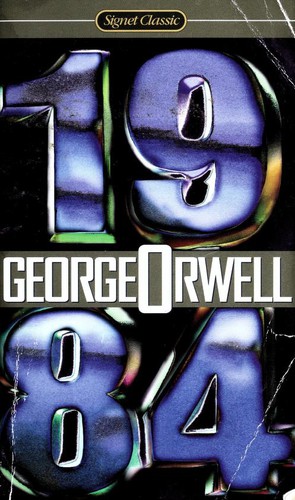
Detailed Book Summary
Core concepts and breakdown of 1984
Published in 1949, George Orwell's "1984" (Nineteen Eighty-Four) remains the definitive literary warning against totalitarianism, mass surveillance, historical revisionism, and the manipulation of truth. The novel is set in Airstrip One (formerly Great Britain), a province of the superstate Oceania, which is locked in perpetual war with two other totalitarian superstates, Eurasia and Eastasia. Society is ruled with total psychological and physical control by the Party under the watchful gaze of its omnipresent figurehead, **Big Brother**.
Every apartment and public square is monitored by two-way **telescreens** that broadcast non-stop state propaganda while spying on citizens' every word and facial expression (`Facecrime`). Children are indoctrinated through the Junior Spies to report their own parents to the feared **Thought Police**, who vaporize dissidents into "unpersons" erased from all historical records.
The protagonist, thirty-nine-year-old **Winston Smith**, works as a low-ranking outer-party clerk in the **Ministry of Truth**, where his daily job is to rewrite old newspaper articles and photographs down "memory holes" so that the Party's predictions and alliances always appear infallible—enforcing the Party slogan: *"Who controls the past controls the future: who controls the present controls the past."* Secretly, Winston harbors a deep hatred for the Party. He commits his first act of rebellion ("Thoughtcrime") by buying an illegal blank diary in a proletarian shop and writing the words: *"DOWN WITH BIG BROTHER."*
Winston soon begins a covert, passionate love affair with **Julia**, a pragmatic young mechanic from the Fiction Department who rebels not through political ideology, but through sensual joy and private freedom. Seeking to join the underground resistance known as the Brotherhood (led by the state's public enemy number one, Emmanuel Goldstein), Winston and Julia confide in **O'Brien**, a charismatic Inner Party official whom Winston believes is a secret conspirator.
In a devastating betrayal, O'Brien turns out to be a fanatical agent of the Thought Police. Arrested and taken to the windowless **Ministry of Love**, Winston is subjected to months of systematic torture and psychological reconditioning. O'Brien reveals that unlike past tyrannies that claimed to rule for the good of the people, the Party seeks power purely for its own sake (*"If you want a picture of the future, imagine a boot stamping on a human face—forever"*). Broken in **Room 101** when confronted with his deepest phobia—starving rats—Winston betrays Julia, surrenders his mind completely to **Doublethink** (`2 + 2 = 5`), and realizes in the chilling final line that he truly loves Big Brother.
Key Takeaways & Actionable Lessons
5 essential lessons you can apply immediately
- 1
Control of Language Controls Thought (Newspeak): By systematically shrinking vocabulary and eliminating words for rebellion or nuance, the Party makes heretical thoughts literally unthinkable.
- 2
Doublethink and the Death of Objective Truth: Totalitarian power triumphs when citizens are conditioned to hold two contradictory beliefs simultaneously and reject the evidence of their own eyes and ears.
- 3
Historical Revisionism: Whoever controls the archives and media narratives of the past can manufacture consent for any policy in the present.
- 4
Perpetual Fear and Scapegoating: Constant external war and daily rituals like the 'Two Minutes Hate' channel citizens' economic misery into blind nationalism.
- 5
Destroy Private Loyalty to Cement State Power: The Party targets romantic love, family bonds, and private friendship because personal loyalty is the last refuge of individual freedom.
Memorable Quotes from 1984
Notable passages by George Orwell
"Who controls the past controls the future. Who controls the present controls the past."
— George Orwell, 1984
"War is peace. Freedom is slavery. Ignorance is strength."
— George Orwell, 1984
"The Party told you to reject the evidence of your eyes and ears. It was their final, most essential command."
— George Orwell, 1984
"Until they become conscious they will never rebel, and until after they have rebelled they cannot become conscious."
— George Orwell, 1984
Frequently Asked Questions
Common questions about 1984 by George Orwell
What is the main message of 1984 by George Orwell?
George Orwell's chilling dystopian masterpiece follows Winston Smith's quiet rebellion against the totalitarian Party of Oceania and its omnipresent figurehead, Big Brother—introducing timeless concepts like Doublethink, Newspeak, and the Thought Police.
What are the key takeaways from 1984?
The core lessons from 1984 include: Control of Language Controls Thought (Newspeak): By systematically shrinking vocabulary and eliminating words for rebellion or nuance, the Party makes heretical thoughts literally unthinkable. Doublethink and the Death of Objective Truth: Totalitarian power triumphs when citizens are conditioned to hold two contradictory beliefs simultaneously and reject the evidence of their own eyes and ears. Historical Revisionism: Whoever controls the archives and media narratives of the past can manufacture consent for any policy in the present.
Who should read 1984?
1984 by George Orwell is an essential Fiction book for readers looking for actionable insights, practical frameworks, and timeless perspectives they can apply in their career and personal life. Our 12-minute summary covers the core ideas before you dive into the full book.