The 7 Habits of Highly Effective People
by Stephen R. Covey
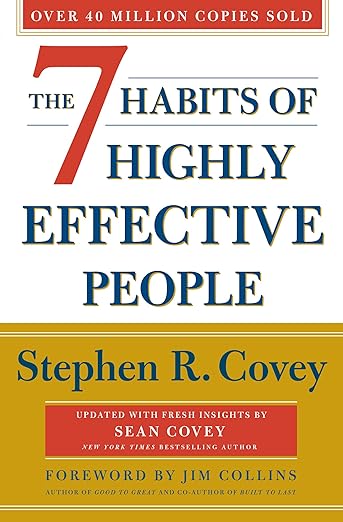
Stephen R. Covey’s The 7 Habits of Highly Effective People is one of the most influential self-development books ever written. Instead of offering quick fixes or motivational slogans, Covey introduces timeless principles—rooted in character, responsibility, and purpose—that transform how we live, work, and interact with others. The book provides a practical path for becoming more effective in every area of life by building strong habits and aligning daily actions with meaningful goals.
Covey begins by explaining that true effectiveness comes from focusing on what we can control and living with integrity. Many people react to circumstances and spend energy blaming others, but effective people take responsibility for their choices. This foundational shift leads to Habit 1: Be Proactive, where Covey urges readers to stop reacting to problems and instead focus on solutions, personal growth, and the actions within their control. When we shift from blame to responsibility, everything changes.
Habit 2, Begin with the End in Mind, invites readers to imagine their own legacy. Covey argues that life becomes clearer when we define our values and long-term goals. With a clear destination, we stop wasting time on distractions that don’t contribute to the life we want. This habit teaches us to design our lives intentionally—so our daily actions align with our deeper purpose.
Habit 3, Put First Things First, brings these insights into daily practice. Covey introduces the Time Management Matrix, emphasizing the importance of Quadrant 2—the tasks that are important but not urgent. This includes health, learning, relationships, and personal projects. By prioritizing these meaningful activities and reducing time spent on distractions, we gain control of our time and build a life based on intention rather than urgency.
The next three habits shift from personal effectiveness to interpersonal mastery. Habit 4, Think Win-Win, encourages cooperation over competition. Covey argues that real success does not require someone else to lose. In relationships, teams, and workplaces, mutual benefit leads to trust, creativity, and long-term success. This mindset turns conflicts into opportunities for collaboration rather than tension.
Habit 5, Seek First to Understand, Then to Be Understood, teaches empathic communication. Instead of rushing to speak, advise, or argue, Covey stresses the importance of deeply listening—paying attention not only to words but also to emotions and intent. When people feel genuinely understood, trust grows, and communication becomes far more effective. This habit transforms conversations, relationships, and leadership.
Habit 6, Synergize, demonstrates the power of teamwork. Covey shows how combining different strengths, perspectives, and abilities creates results that individuals alone could never achieve. Just as birds fly farther in a V formation or partners combine talents to create something remarkable, synergy amplifies human potential. It celebrates diversity and turns collaboration into a creative force.
Finally, Habit 7, Sharpen the Saw, emphasizes the need for renewal. Covey warns that constant work without rest leads to burnout and poor performance—just like using a dull saw to cut wood. Sharpening the saw means taking care of four key areas: body, mind, heart, and spirit. Through rest, exercise, learning, and meaningful relationships, we refresh our energy and increase our long-term effectiveness.
Conclusion
The 7 Habits of Highly Effective People is far more than a productivity manual—it’s a philosophy for living with clarity, intention, and integrity. Covey’s principles guide us to become proactive, purpose-driven individuals who build strong relationships, communicate with empathy, collaborate effectively, and care for our overall well-being. By practicing these seven habits, anyone can build a more balanced, successful, and fulfilling life.