The Power of Habit
by Charles Duhigg
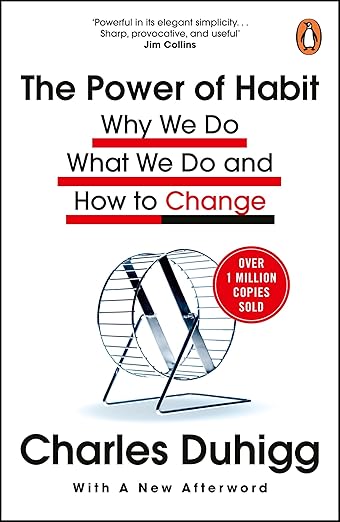
The Power of Habit by Charles Duhigg is a compelling exploration of how habits shape our lives, our work, and our societies, and how understanding their mechanics gives us the power to change them. Through scientific research, real-world case studies, and practical insights, Duhigg reveals why habits exist, how they function, and how individuals, organizations, and entire communities can transform their behaviors by mastering the habit loop.
The book begins by explaining that every habit—good or bad—operates through a simple neurological process called the habit loop, which consists of a cue, a routine, and a reward. The cue triggers the behavior, the routine is the action itself, and the reward reinforces it, carving a strong neural pathway in the brain. Once this loop becomes automatic, it explains everything from our morning routines to our cravings, procrastination patterns, and self-destructive behaviors. Duhigg shows that habits are not destiny; by identifying cues and rewards and experimenting with different routines, we can reshape even the most stubborn patterns.
A major insight is the role of craving, the force that drives habits. Habits persist because our brains anticipate the reward and crave it. This craving can be used to create new, healthier routines by giving the brain the reward it seeks in a more positive way. Building on this, Duhigg introduces the Golden Rule of Habit Change, which states that habits cannot be eliminated but can be changed by replacing the routine while keeping the same cue and reward. This is how people overcome addictions, procrastination, and unhealthy routines: not by willpower alone, but by carefully redesigning the loop.
The book then shifts to the world of organizations, showing how companies function through collective habits. Duhigg introduces the idea of keystone habits, powerful behaviors that spark chain reactions across multiple areas of life or business. Small changes—like daily exercise or making your bed—can trigger widespread transformation. In companies, keystone habits can reshape culture, improve productivity, and elevate performance. Duhigg illustrates this through the example of Alcoa, which was transformed when its CEO focused obsessively on worker safety—a seemingly small priority that cascaded into higher profits, better communication, and a more united workforce.
Willpower also emerges as one of the most important keystone habits. Duhigg explains how organizations like Starbucks train employees to turn willpower into automatic responses, enabling them to handle stress and make better decisions even in challenging situations. Through intentional routines, employees learn to rely on habits—not emotion—to guide their actions, proving that willpower is not an innate trait but a trainable skill.
Crises also play a surprising role in shaping habits. Duhigg demonstrates how leaders use moments of urgency—real or strategically emphasized—to overhaul broken systems and replace harmful organizational routines with healthier ones. A crisis removes resistance and creates the momentum needed to adopt new structures that later become permanent habits within institutions.
The book then widens its lens to examine how habits shape societies and social movements. Through the stories of the Montgomery Bus Boycott and Saddleback Church, Duhigg explains that large-scale change emerges through a combination of strong-tie relationships, weak-tie networks, and the creation of new social norms. Rosa Parks’ influence was not just her act of protest—it was her deep connections within the community and the habit-driven response of her network that sparked a historic movement. Once enough people adopt a new behavioral norm, it becomes self-sustaining and reshapes society.
Duhigg concludes by exploring the neuroscience of free will. While habits operate subconsciously in the brain, humans still possess the power to change them. Our neural pathways may automate behaviors, but the brain’s plasticity allows us to reshape those pathways through conscious effort and repeated practice. This blend of automatic behavior and personal agency means that while habits drive much of our daily lives, we are not prisoners to them—we hold the power to redesign them intentionally.
Ultimately, The Power of Habit is a science-backed guide for transforming behavior on every level. Duhigg shows that habits are not just small parts of life—they are the invisible architecture of our days, determining our decisions, our productivity, our health, and even our happiness. By understanding how habits work, identifying the cues that trigger them, and deliberately reshaping routines, we can take control of our lives, improve our organizations, and spark positive social change.